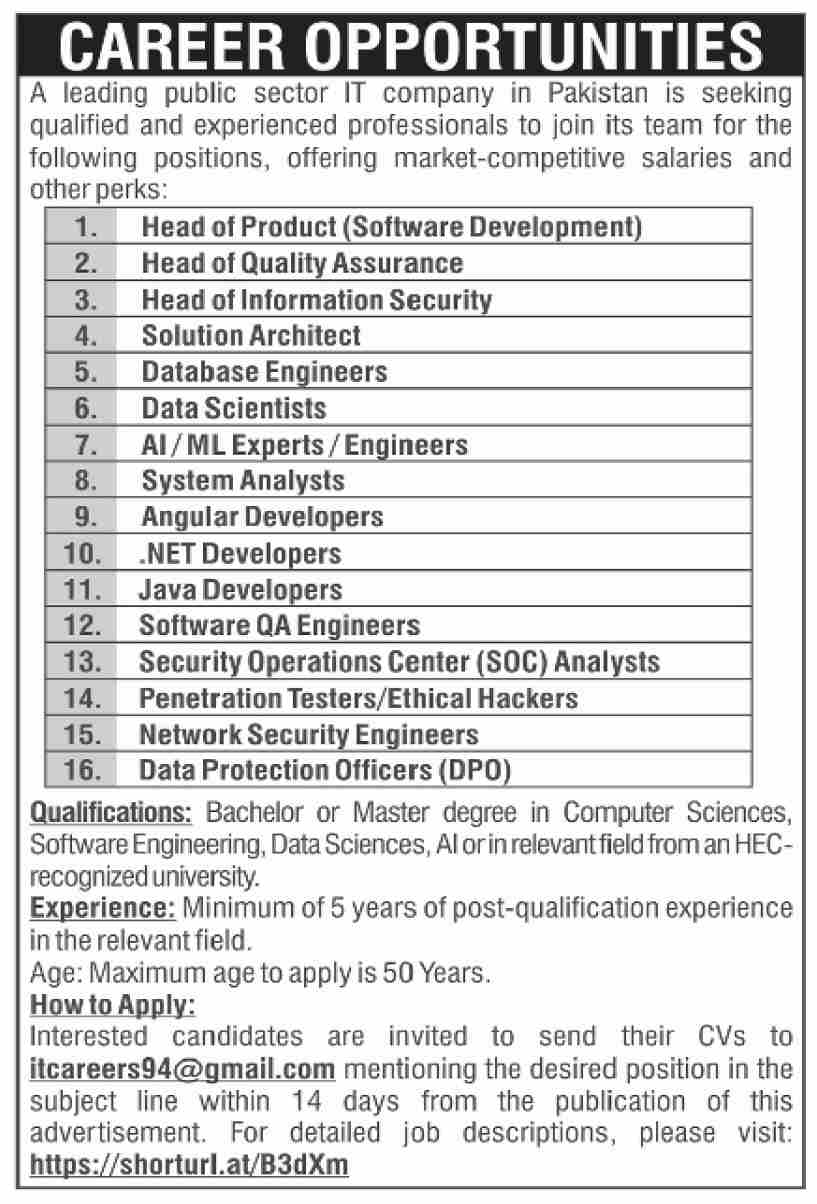
- Salary Offer 90000-100000 USD 90000-100000 Month
- Address Karachi, Sindh, Pakistan
- Age limit 20-30
- Gender Both
- Job Sector Government
- Apply Through By hand
- Job Authority
- Number of Post Multiples
- Education Bachelor | Master | BCS | MCS | BIT | MIT | M.sc | MS | BS
- TA/DA No
- Domicile Punjab,kpk,Sindh
- Newspapper Dawn Jobs
- Experience Required Fresh Candidate can Apply
- Official Website https://epaper.dawn.com/?page=13_11_2024_005
| Posted On | |
|---|---|
| Company: | |
| Location: | |
| Job Type: | |
| Last Date: |
Jobs Positions
Solution Architect & Database Engineer Jobs 2024: Empower Your Career in the Digital Age
In today’s fast-evolving technological landscape, the demand for skilled professionals who can design and manage robust IT solutions is at an all-time high. Two of the most sought-after roles in the tech industry are Solution Architects and Database Engineers. These professionals play a crucial role in helping businesses implement technology solutions that are scalable, efficient, and aligned with their strategic objectives. In 2024, companies across various industries are actively seeking talented individuals for these positions to help them navigate the complexities of digital transformation.
If you’re someone with a deep understanding of technology infrastructure, architecture, and databases, and you’re looking for a new challenge or career advancement, the roles of Solution Architect and Database Engineer offer exciting opportunities. These positions provide both a fulfilling career path and the chance to have a significant impact on how businesses operate, innovate, and grow.
Solution Architect Jobs 2024: Design the Future of Technology
A Solution Architect is responsible for designing and implementing comprehensive technical solutions that meet a company’s business needs. This role is crucial for organizations looking to streamline their operations, adopt new technologies, and align their IT strategies with overall business goals. Solution Architects often work with cross-functional teams, including developers, project managers, and stakeholders, to create solutions that are both scalable and secure.
Key Responsibilities of a Solution Architect
- Designing Technical Solutions: One of the core responsibilities of a Solution Architect is to design and implement software systems that address complex business problems. This involves assessing the technical requirements of a business and creating solutions that are feasible and effective.
- Collaborating with Stakeholders: Solution Architects collaborate with business leaders, developers, and other IT professionals to ensure that the technology solutions align with business objectives. Effective communication is essential to bridge the gap between technical teams and non-technical stakeholders.
- Creating Scalable Architectures: A Solution Architect ensures that the solutions they design can scale with the growth of the business. This means considering future demands and ensuring that the infrastructure is flexible enough to handle increased traffic, data, and workloads.
- Ensuring Security and Compliance: Security is a major concern in today’s digital world. A Solution Architect must design solutions that adhere to industry standards and comply with regulatory requirements, ensuring that both data and applications are secure.
- Evaluating New Technologies: Keeping up with the latest trends and innovations in technology is vital for a Solution Architect. They must continually evaluate emerging technologies to determine how they can be integrated into their existing systems or how they could improve efficiency.
Qualifications and Skills Required for Solution Architects
To qualify for a Solution Architect position, candidates typically need a combination of educational qualifications, industry certifications, and professional experience. Some of the key requirements include:
- Educational Background: A Bachelor’s or Master’s degree in Computer Science, Information Technology, Engineering, or a related field is often required. Additional certifications in cloud computing, architecture frameworks (e.g., TOGAF), or specific technologies (e.g., AWS, Microsoft Azure) are highly beneficial.
- Industry Experience: At least 5–7 years of experience in IT development or architecture is typically expected, with a proven track record of designing and implementing solutions for large-scale projects.
- Technical Proficiency: A deep understanding of programming languages, software development methodologies, and cloud platforms is essential. Knowledge of DevOps practices, microservices architecture, and IT infrastructure is also valuable.
- Communication and Leadership: Solution Architects need to have strong communication and interpersonal skills, as they often lead technical teams and must communicate complex technical information to non-technical stakeholders.
Database Engineer Jobs 2024: Build the Backbone of Modern Applications
A Database Engineer plays a pivotal role in designing, implementing, and maintaining databases that support an organization’s critical applications. With businesses relying heavily on data-driven insights to make decisions, the role of a Database Engineer is essential for ensuring that data is stored, retrieved, and managed efficiently. In 2024, companies across the globe are looking to hire talented Database Engineers who can build scalable, high-performance databases and maintain data integrity.
Key Responsibilities of a Database Engineer
- Database Design and Architecture: Database Engineers are responsible for designing database systems that can handle vast amounts of data. This includes defining the structure, schema, and relationships of databases to optimize data storage and retrieval.
- Database Management and Maintenance: Ensuring that databases run efficiently is a crucial task. Database Engineers are tasked with performing routine maintenance, such as optimizing queries, ensuring data backups, and ensuring uptime and availability.
- Data Security and Integrity: A Database Engineer must ensure that data is secure, consistent, and protected from unauthorized access or corruption. This involves implementing access controls, encryption, and regular audits to ensure compliance with security standards.
- Performance Tuning: As organizations increasingly rely on databases to process large amounts of data, it is essential to ensure high performance. Database Engineers are responsible for tuning databases to improve speed, responsiveness, and reliability.
- Collaboration with Development Teams: Database Engineers work closely with software developers to integrate databases with applications. This collaboration ensures that applications interact seamlessly with the database, supporting the delivery of high-quality, data-driven solutions.
Qualifications and Skills Required for Database Engineers
To qualify for a Database Engineer role, candidates need a blend of education, technical expertise, and practical experience. Some of the key qualifications include:
- Educational Background: A Bachelor’s or Master’s degree in Computer Science, Information Systems, or a related field is generally required. Certifications in database management systems (DBMS) like Oracle, MySQL, Microsoft SQL Server, or PostgreSQL are highly desirable.
- Industry Experience: At least 3–5 years of experience in database development or administration is usually expected, with a strong background in SQL and relational databases.
- Technical Proficiency: Database Engineers must be proficient in database design, query optimization, and data modeling. Familiarity with cloud-based databases, NoSQL databases, and big data technologies is also an advantage.
- Problem-Solving and Analytical Skills: The ability to analyze complex database issues and find effective solutions is a key skill for Database Engineers. Attention to detail and strong troubleshooting abilities are essential.
Opportunities for Growth and Career Development
Both Solution Architects and Database Engineers are critical roles in the modern tech landscape, offering strong career growth potential. In 2024, these positions offer professionals the opportunity to specialize in emerging fields such as cloud computing, machine learning, and big data analytics.
For Solution Architects, opportunities for advancement include moving into higher leadership roles, such as Chief Technology Officer (CTO) or Enterprise Architect. Additionally, Solution Architects can expand their expertise in niche areas such as cloud architecture, blockchain solutions, or AI-driven architectures.
For Database Engineers, career growth may involve transitioning to roles like Database Administrator (DBA), Data Architect, or Big Data Engineer, where they can design large-scale data systems for enterprises. Engineers may also move into specialized areas, such as data warehousing or data governance, or they may pursue leadership positions like Director of Data Engineering.
How to Apply for Solution Architect & Database Engineer Jobs
For those interested in applying for Solution Architect or Database Engineer jobs in 2024, it’s important to keep an eye on job listings from tech companies, consulting firms, and multinational organizations. Candidates can apply through company websites, professional networking platforms like LinkedIn, or specialized job portals in the tech industry.
When applying, candidates should ensure that their resumes highlight their technical expertise, problem-solving skills, and relevant project experience. A well-crafted portfolio showcasing relevant case studies, projects, and technical certifications will further strengthen your application.
Conclusion
The roles of Solution Architect and Database Engineer offer exciting career opportunities in 2024 for professionals with a passion for technology and innovation. These positions are essential to the development of scalable, secure, and high-performance IT systems that power modern businesses. Whether you’re interested in designing comprehensive technical solutions or building robust data infrastructure, both careers offer abundant opportunities for professional growth, specialized skills development, and the chance to contribute to the digital transformation of organizations worldwide.